


October 1, 2026
John Skelly

Key Takeaways About Indoor Environmental Professionals
- Indoor Environmental Professional (IEP) is a commonly used industry term, but it is not itself a formal certification and does not tell you how experienced someone is.
- John Skelly, owner of HNST Environmental, is a Council-Certified Indoor Environmental Consultant (CIEC) through the American Council for Accredited Certification (ACAC), with 22 years of field experience.
- When choosing an IEP for a mold or indoor environmental investigation, the individual’s actual credentials, experience, and ability to investigate the building as a whole matter far more than the title alone.
If you are searching for an Indoor Environmental Professional (IEP) to investigate mold, moisture, indoor air quality, or environmental concerns in your home, you may assume that the term IEP represents a specific certification or level of expertise.
It doesn’t. And that distinction is important.
The term Indoor Environmental Professional is widely used to describe someone who works with indoor environmental conditions, but it does not, by itself, tell you how much training or field experience that person has.
At HNST Environmental, we believe consumers deserve to know the difference.
That is one reason John Skelly pursued and maintains the Council-Certified Indoor Environmental Consultant (CIEC) credential through the American Council for Accredited Certification (ACAC), in addition to more than two decades of hands-on experience in the industry.
What Is an Indoor Environmental Professional?
An Indoor Environmental Professional, or IEP, is generally a professional who works with conditions affecting the indoor environment.
Depending on the individual’s background, that work may involve mold and moisture, indoor air quality, building science, ventilation, microbial contamination, chemical exposures, or other indoor environmental concerns.
The problem is that IEP is not a standardized certification that establishes a particular level of expertise.
Someone may refer to themselves as an IEP after completing a relatively short training course. Someone else using the same term may have spent decades investigating complicated buildings and indoor environmental problems.
The title is the same.
The experience may be completely different.
John has spoken publicly about this distinction himself. Early in his career, he became an IEP after taking a two-day class, although he already had several years of hands-on remediation experience. His point is not that training is unimportant. It is that the term IEP alone does not tell a consumer how experienced the professional actually is.
That is why we believe consumers should look beyond the title.

Mold inspections may involve carefully cleaning or wiping surfaces to evaluate conditions and help determine whether further investigation or testing is needed.
Is an IEP Certification?
Not by itself. This is one of the biggest misconceptions surrounding the term.
If someone tells you they are an “IEP,” that does not necessarily mean they have earned a formal professional certification. It also does not tell you how many years they have spent investigating buildings.
There are, however, formal certifications specifically designed for professionals working in indoor environmental consulting.
John Skelly holds the Council-Certified Indoor Environmental Consultant (CIEC) designation through ACAC. ACAC’s certification program is designed to identify professionals who have demonstrated knowledge of indoor environmental quality and verifiable field experience. Candidates must meet eligibility requirements, pass a rigorous examination, undergo certification-board review, and maintain the credential through continuing professional development and recertification.
That distinction is important:
IEP is a professional description. CIEC is a formal certification.
And in John’s case, the certification is backed by more than 22 years of actual field experience. ACAC’s current directory lists John J. Skelly as a Council-certified professional with 22 years of field experience and a certification valid through May 31, 2028.
Why Does the CIEC Certification Matter?
A certification is not a replacement for experience. But a meaningful certification can provide an additional way for consumers to evaluate a professional.
ACAC’s CIEC program is specifically intended for professionals with expertise in the fundamental principles of indoor environmental quality. The certification addresses broad knowledge rather than simply completing one particular training course. ACAC requires candidates to demonstrate relevant field experience and pass an examination covering the profession’s broader body of knowledge.
That matters because indoor environmental investigations are rarely about one isolated issue.
A building can have moisture problems, HVAC concerns, hidden water intrusion, microbial growth, ventilation problems, or building-material issues occurring at the same time.
The investigator needs to understand how those pieces can interact.
ACAC describes CIEs and CIECs as professionals with verified knowledge in areas including HVAC, building science, mold and microbial issues, industrial hygiene, lead-based paint, and asbestos.
That broader perspective is particularly important when a home has a complicated history or when a client is experiencing concerns that cannot be explained by simply taking an air sample.
Why John’s Experience Matters
John Skelly did not enter this field through a purely academic path.
His career began with hands-on work in the environmental and restoration industry in 2003. He worked with water damage and mold remediation, progressed into management, and eventually founded HNST with a focus on independent mold assessment and environmental consulting.
Today, ACAC lists John as a Council-certified professional with 22 years of field experience. HNST’s work includes mold assessments, indoor air quality investigations, CIRS-level inspections, and related environmental consulting.
That combination of formal certification and extensive field experience is important.
A person can take a class and learn terminology. A person can pass an exam and demonstrate knowledge.
But years of investigating actual buildings provide something different: exposure to the many ways that moisture, construction, ventilation, building materials, and contamination can interact in the real world.
John’s approach is built around that combination.
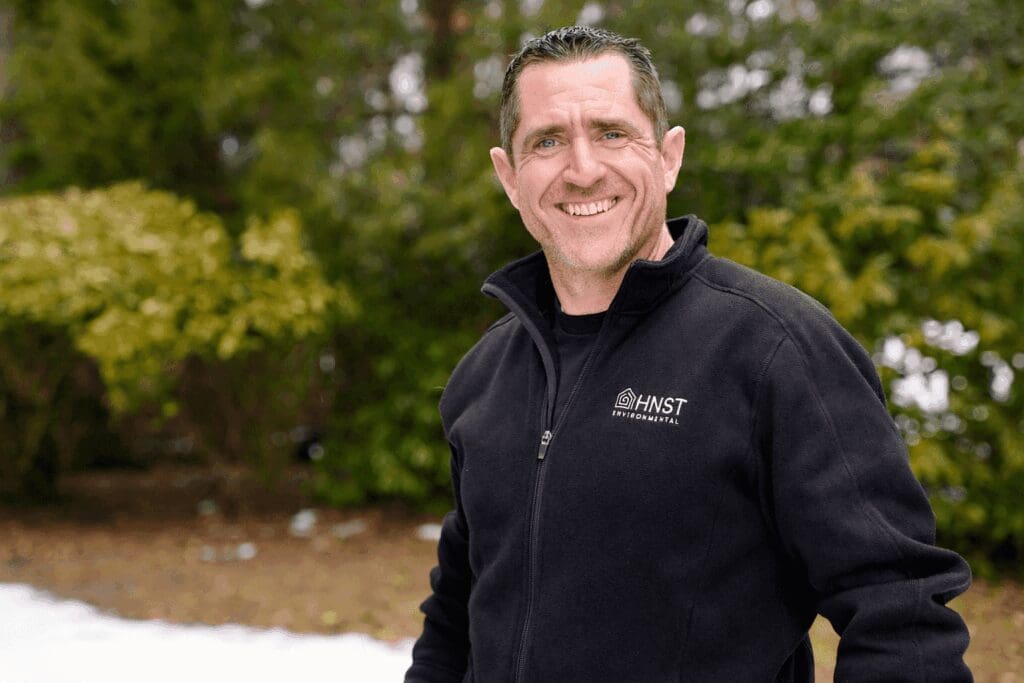
John Skelly brings more than two decades of experience to mold, water damage, HVAC, and indoor environmental investigations.
An Experienced IEP Should Investigate More Than Mold
A mold inspection should not simply answer the question, “Is there mold?”
The more useful questions are often:
- Where is the moisture coming from?
- How did the problem develop?
- Could there be hidden areas of concern?
- What conditions are allowing the problem to continue?
- What information is actually necessary to understand the situation?
The EPA emphasizes that moisture control is fundamental to controlling mold. If the underlying moisture problem is not corrected, mold growth can return. Whether you are concerned about mildew or black mold, the investigation should focus on identifying the moisture conditions and building factors contributing to the growth.
That is why we believe an experienced indoor environmental consultant should approach a building as a system rather than treating mold as an isolated laboratory result.
Depending on the circumstances, an investigation may involve visual assessment, moisture measurements, thermal imaging, building-science observations, HVAC evaluation, targeted sampling, or investigation of areas where problems may be concealed. If you are researching how to detect mold in the home, it is important to understand that a thorough investigation involves more than looking for visible growth or relying on a single air sample.
Not every building requires every test.
Good professional judgment includes knowing when testing is useful, what question it is intended to answer, and how the result should be interpreted in the context of the building.
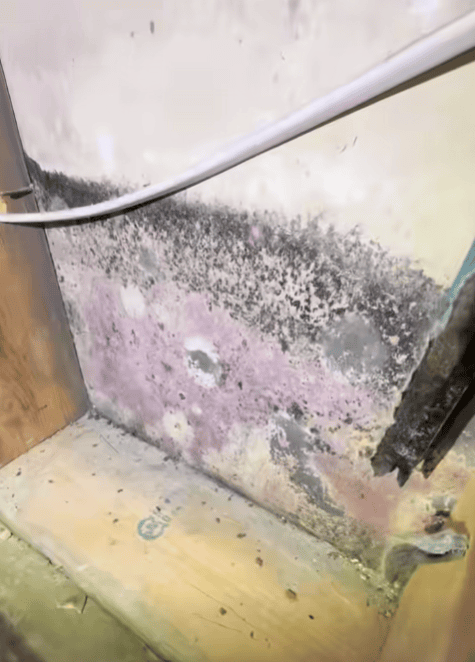
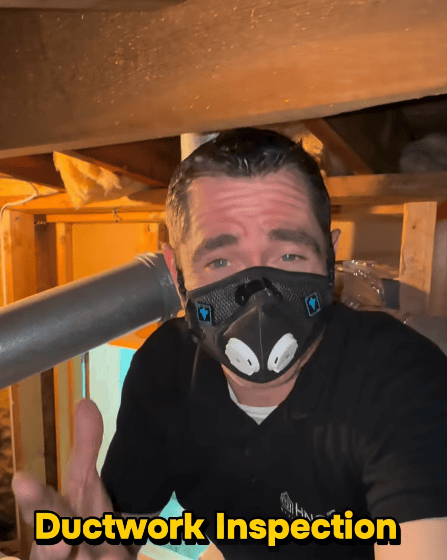
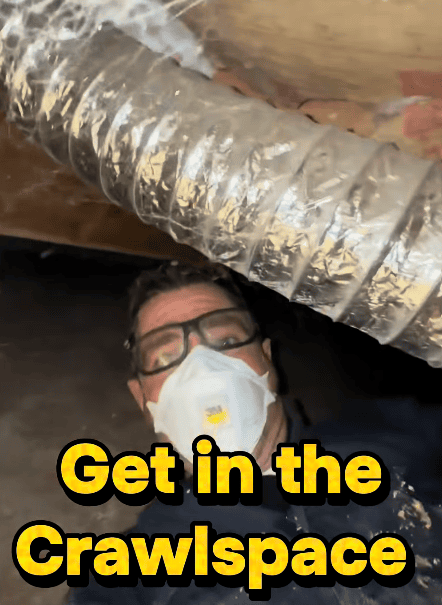
Photos by: HNST via https://www.instagram.com/john_the_mold_guy/
Why This Is Especially Important for Environmentally Sensitive Clients
People searching for an IEP are not always dealing with a straightforward mold problem.
Some are living in homes where previous inspections produced conflicting answers. Others may have already completed remediation and want to know whether the work addressed the underlying problem. Others may be concerned about a building because of environmental sensitivities or a history of water damage.
People may also search for the best air cleaner for mold when they are concerned about indoor air quality, but an air cleaner does not identify or correct the moisture source that may be contributing to a building problem.
In these situations, the experience of the investigator becomes particularly important.
You want someone who can look at the available evidence without jumping to conclusions. You also want someone who understands the limitations of testing.
A laboratory report can provide useful information, but it does not replace an investigation of the building itself.
John’s work with HNST is specifically focused on providing independent assessment rather than selling remediation services. HNST describes its approach as independent mold and environmental inspection, with the goal of providing objective guidance rather than creating remediation upsells.
Why Independence Matters
Another question worth asking when choosing an IEP is whether the person assessing your property also performs the remediation. There is a potential conflict of interest when the person determining what work is needed also profits from performing that work.
ACAC’s own policies strongly discourage its certificants from performing both assessment and remediation on the same project because of these potential conflicts. At HNST, the focus is on assessment and consulting, not selling remediation.
That separation allows the investigation to focus on determining what is actually happening in the building and what recommendations are appropriate.
Sometimes the answer is that significant remediation is necessary. Sometimes it is not. A good consultant should be willing to tell you either one.
What Should You Ask an IEP Before Hiring Them?
If you are looking for an Indoor Environmental Professional, don’t be afraid to ask questions.
We recommend asking:
- What certifications do you hold?
- Who issued the certification?
- How much actual field experience do you have?
- Who will personally perform my inspection?
- What types of buildings and environmental problems have you investigated?
- How do you determine what testing is appropriate?
- Do you perform remediation, or are you independent from the remediation contractor?
- Can you explain your findings and recommendations in terms I can understand?
The goal isn’t to find someone with the most impressive-sounding title.
The goal is to find someone who has the knowledge, experience, credentials, and independence necessary to properly evaluate your building.
Why We Believe John’s CIEC Certification Matters
At HNST, we don’t believe a certification alone makes someone an expert.
John’s CIEC certification matters because it is one piece of a much larger professional foundation.
It is backed by:
- A formal ACAC certification
- Verified field experience
- A rigorous certification examination
- Ongoing professional development
- More than two decades working in the field
- Extensive experience with mold, moisture, indoor air quality, and environmental investigations
- A commitment to independent assessment
ACAC’s current certification directory confirms John’s CIEC status and 22 years of field experience.
For someone searching specifically for an Indoor Environmental Professional, that distinction is worth understanding.
You are not simply hiring someone because they use the letters “IEP.”
You are hiring an individual to investigate one of the most complicated systems you interact with every day: your indoor environment.
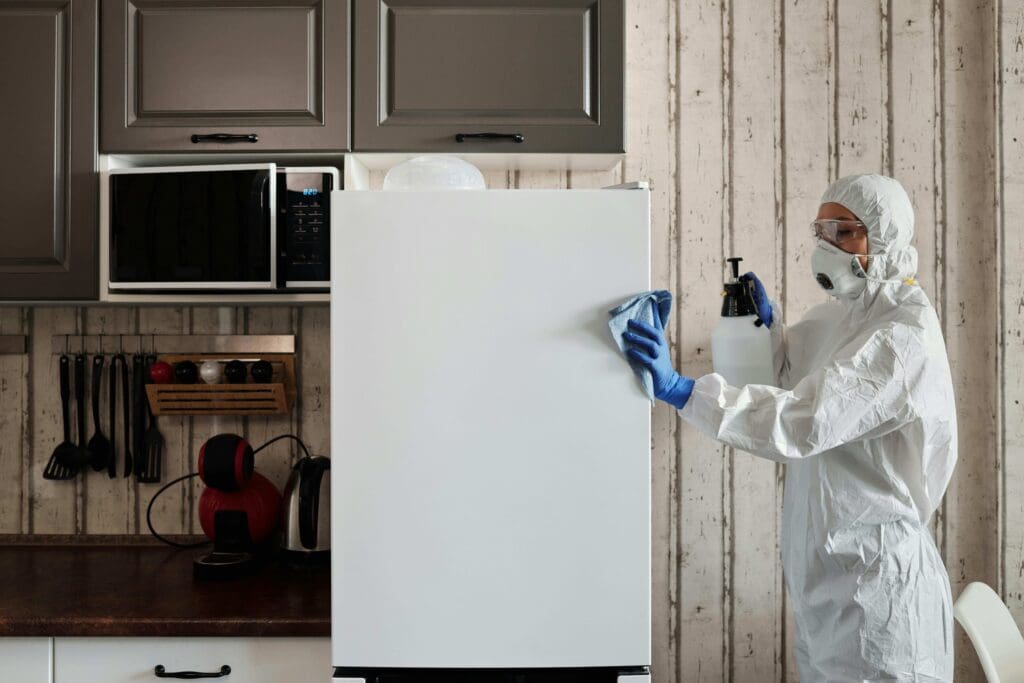
Professional cleaning of a refrigerator and surrounding indoor space using protective equipment to address potential contamination and maintain a healthier indoor environment.
The Bottom Line
The term Indoor Environmental Professional (IEP) can be useful, but it should not be treated as a certification or guarantee of experience.
If you are evaluating an IEP, look deeper.
Find out what certifications they actually hold. Find out how those certifications are earned. Ask about their field experience. Find out who will perform the inspection. Ask whether they are independent from remediation.
In John’s case, those answers are clear.
John Skelly is a Council-Certified Indoor Environmental Consultant (CIEC) through ACAC, with 22 years of field experience.
For HNST, that credential is not about adding letters after John’s name. It represents a commitment to professional standards, demonstrated knowledge, continuing education, and the level of expertise needed to investigate complex indoor environmental conditions.
If you are looking for an experienced Indoor Environmental Professional to evaluate mold, moisture, indoor air quality, or other environmental concerns in your home or building, contact HNST to discuss your situation and determine what type of investigation is appropriate.
Schedule Your Inspection
Submit

Ready for real answers?
Let's get you on the schedule.
Tell us a little about your home and what's going on. Someone from our team gets back to you, usually within two business days, to set up your inspection. No pressure. No obligation.
Thank you for the message.

Follow us on Instagram
Call Now
Your request has been received, and a member of our team will contact you as soon as possible to schedule your inspection.
We look forward to assisting you and ensuring you have clear, reliable answers for your property
If you have any urgent questions in the meantime, please don't hesitate to contact us directly.
We look forward to assisting you and ensuring you have clear, reliable answers for your property.


